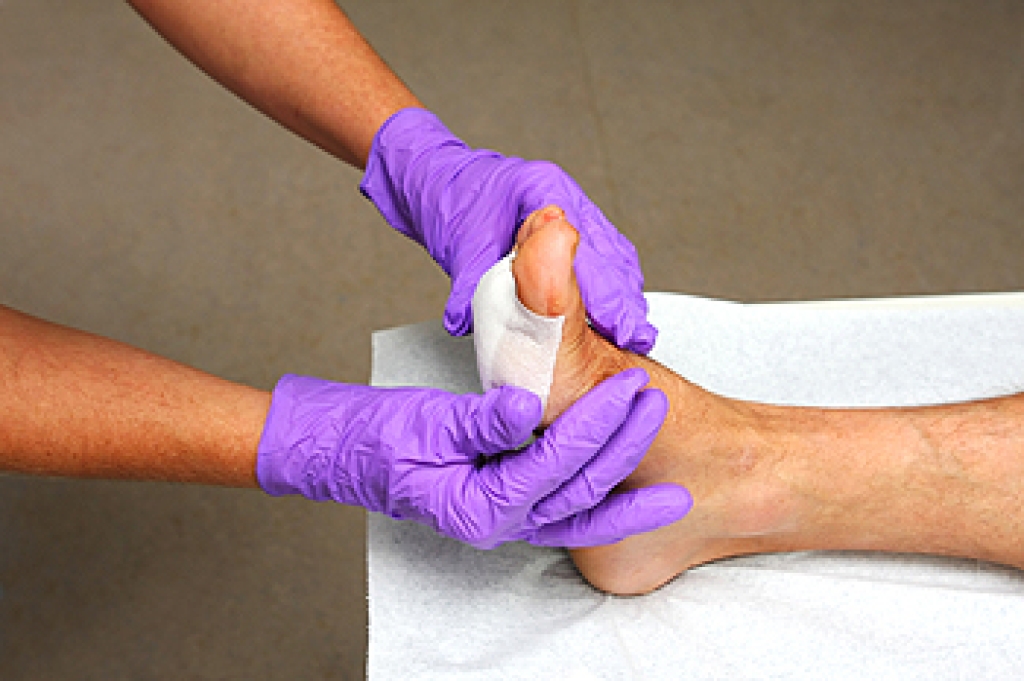
Neuropathic wounds are slow-healing injuries that often develop when nerve damage reduces feeling in the feet, making it easier to miss cuts, pressure spots, or irritation. People with diabetes are especially at risk because reduced sensation can allow small problems to worsen without notice. These wounds are among the more common long-lasting skin injuries treated by podiatrists, alongside circulation-related sores, pressure-related skin breakdown, and delayed healing after procedures. Neuropathic wounds often appear on pressure-bearing areas such as the bottom of the foot or toes. Treatment focuses on reducing pressure, removing damaged tissue when needed, controlling infection, and supporting healthy healing conditions. A podiatrist may also assess circulation, foot structure, and walking patterns that contribute to repeated injury. If you notice a sore on your foot that is not improving or you have numbness with skin breakdown, it is strongly suggested that you are under the care of a podiatrist to explore effective relief and management solutions.
Wound care is an important part in dealing with diabetes. If you have diabetes and a foot wound or would like more information about wound care for diabetics, consult with the podiatrists from Boston Common Podiatry. Our doctors will assess your condition and provide you with quality foot and ankle treatment.
What Is Wound Care?
Wound care is the practice of taking proper care of a wound. This can range from the smallest to the largest of wounds. While everyone can benefit from proper wound care, it is much more important for diabetics. Diabetics often suffer from poor blood circulation which causes wounds to heal much slower than they would in a non-diabetic.
What Is the Importance of Wound Care?
While it may not seem apparent with small ulcers on the foot, for diabetics, any size ulcer can become infected. Diabetics often also suffer from neuropathy, or nerve loss. This means they might not even feel when they have an ulcer on their foot. If the wound becomes severely infected, amputation may be necessary. Therefore, it is of the upmost importance to properly care for any and all foot wounds.
How to Care for Wounds
The best way to care for foot wounds is to prevent them. For diabetics, this means daily inspections of the feet for any signs of abnormalities or ulcers. It is also recommended to see a podiatrist several times a year for a foot inspection. If you do have an ulcer, run the wound under water to clear dirt from the wound; then apply antibiotic ointment to the wound and cover with a bandage. Bandages should be changed daily and keeping pressure off the wound is smart. It is advised to see a podiatrist, who can keep an eye on it.
If you have any questions please contact our office located in Boston, MA . We offer the newest diagnostic and treatment technologies for all your foot and ankle needs.