Blog

Common Pediatric Foot Alignment Conditions

Some children are born with or develop foot alignment conditions that affect how the foot looks and functions. Clubfoot is a condition where the foot turns inward and downward, often requiring early treatment to guide proper positioning. Metatarsus adductus is another condition where the front part of the foot curves inward, giving it a bean-like shape. These conditions can vary in severity, and while some improve as a child grows, others need medical care to prevent long-term problems. Parents may notice unusual foot shape, uneven walking, or difficulty fitting shoes properly. Early evaluation is important to support normal development and movement. A podiatrist can assess the structure of the foot, monitor growth, and recommend treatments such as stretching, bracing, or other interventions if needed.If your child has an unusual foot shape or walking pattern, it is suggested that you seek care from a podiatrist.

Congenital foot problems require immediate attention to avoid future complications. If you have any concerns, contact the podiatrists of Boston Common Podiatry. Our doctors can provide the care you need to keep you pain-free and on your feet.

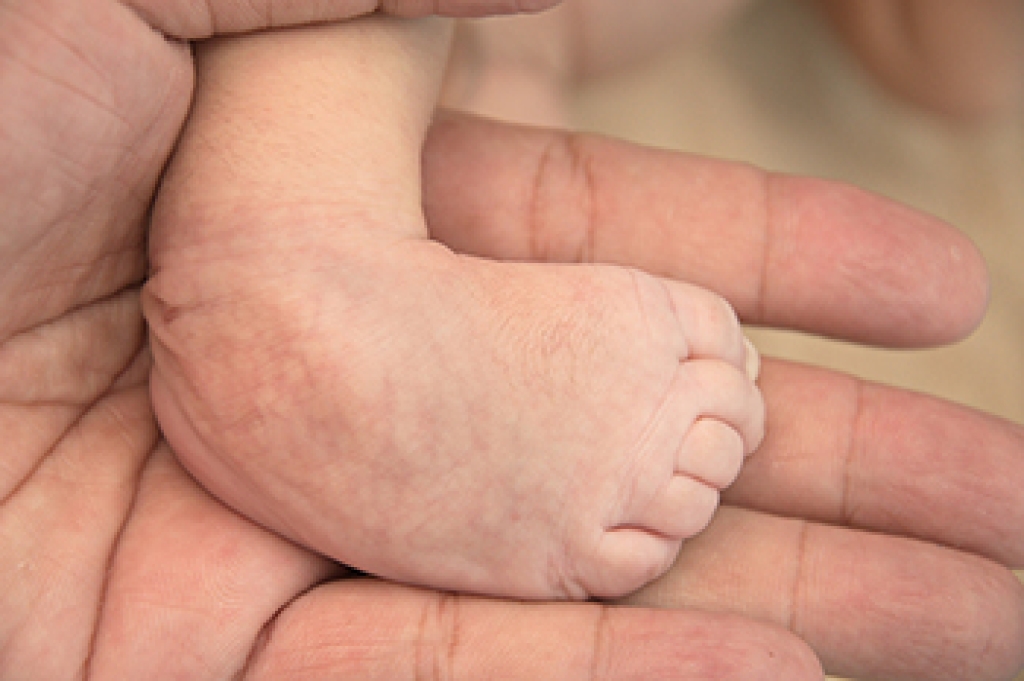
Congenital foot problems are deformities affecting the feet, toes, and/or ankles that children are born with. Some of these conditions have a genetic cause while others just happen. Some specific foot ailments that children may be born with include clubfeet, polydactyly/macrodactyly, and cleft foot. There are several other foot anomalies that can occur congenitally. What all of these conditions have in common is that a child may experience difficulty walking or performing everyday activities, as well as trouble finding footwear that fits their foot deformity. Some of these conditions are more serious than others. Consulting with a podiatrist as early as possible will help in properly diagnosing a child’s foot condition while getting the necessary treatment underway.

What are Causes of Congenital Foot Problem?

A congenital foot problem is one that happens to a child at birth. These conditions can be caused by a genetic predisposition, developmental or positional abnormalities during gestation, or with no known cause.

What are Symptoms of Congenital Foot Problems?

Symptoms vary by the congenital condition. Symptoms may consist of the following:

  • Clubfoot, where tendons are shortened, bones are shaped differently, and the Achilles tendon is tight, causing the foot to point in and down. It is also possible for the soles of the feet to face each other.
  • Polydactyly, which usually consists of a nubbin or small lump of tissue without a bone, a toe that is partially formed but has no joints, or an extra toe.
  • Vertical talus, where the talus bone forms in the wrong position causing other bones in the foot to line up improperly, the front of the foot to point up, and the bottom of the foot to stiffen, with no arch, and to curve out.
  • Tarsal coalition, when there is an abnormal connection of two or more bones in the foot leading to severe, rigid flatfoot.
  • Cleft foot, where there are missing toes, a V-shaped cleft, and other anatomical differences.
  • Macrodactyly, when the toes are abnormally large due to overgrowth of the underlying bone or soft tissue.

Treatment and Prevention

While there is nothing one can do to prevent congenital foot problems, raising awareness and receiving neonatal screenings are important. Early detection by taking your child to a podiatrist leads to the best outcome possible.

If you have any questions, please feel free to contact our office located in Boston, MA . We offer the newest diagnostic and treatment technologies for all your foot care needs.
Read more about Congenital Foot Problems

Are You Suffering From Ingrown Toenails?

If left untreated, an ingrown toenail can lead to more serious concerns, such as an infection. Knowing proper nail care can help in the prevention of an ingrown toenail. Give us a call, and get treated!

Types and Grades of Ankle Sprains

An ankle sprain occurs when the ligaments, which are strong bands that connect bones, are stretched or torn after the ankle twists beyond its normal range. There are three main types of ankle sprains based on how the injury happens. The most common is an inversion sprain, where the foot rolls inward and stresses the outer ligaments. An eversion sprain occurs when the foot turns outward, affecting the inner ligaments. A high ankle sprain involves the ligaments above the ankle that connect the lower leg bones. Sprains are also graded by severity. A Grade 1 sprain involves mild stretching with slight pain and swelling. A Grade 2 sprain includes a partial tear, leading to more swelling, bruising, and limited movement. A Grade 3 sprain is a complete tear, often causing severe pain and instability. A podiatrist can assess the injury, order imaging, and guide proper treatment. If you have sprained an ankle, it is suggested that you make an immediate appointment with a podiatrist for help.

Although ankle sprains are common, they aren’t always minor injuries. If you need your ankle injury looked at, contact the podiatrists from Boston Common Podiatry. Our doctors can provide the care you need to keep you pain-free and on your feet.

How Does an Ankle Sprain Occur?

Ankle sprains are the result of a tear in the ligaments within the ankle. These injuries may happen when you make a rapid shifting movement while your foot is planted. A less common way to sprain your ankle is when your ankle rolls inward while your foot turns outward.

What Are the Symptoms?

  • Pain at the sight of the tear
  • Bruising/Swelling
  • Ankle area is tender to touch
  • In severe cases, may hear/feel something tear
  • Skin discoloration

Preventing a Sprain

  • Wearing appropriate shoes for the occasion
  • Stretching before exercises and sports
  • Knowing your limits

Treatment of a Sprain

In many cases, the RICE method (Rest, Ice, Compression, and Elevate) is used to treat ankle sprains. However, you should see a podiatrist to see which treatment option would work best with your injury. In severe cases, surgery may be required.

It is important to ask your doctor about rehab options after you receive treatment for your injury. Stretching, strength training, and balance exercises may help the ankle heal while also preventing further injury.

If you have any questions, please feel free to contact our office located in Boston, MA . We offer the newest diagnostic and treatment technologies for all your foot care needs.

Read more about Three Grades of Ankle Sprains
scroll to top